John Marcher’s bereavement after May’s death
The Beast in the JungleJohn Marcher’s bereavement after May Bartram’s death is marked by a cruel mismatch: she had been indispensable to his inner life, but he has no publicly legible claim to the intimacy they shared. Her death removes not only his closest companion but also the suspense around which he had organized his life. Unable to explain their bond without disclosing the secret of the Beast, he is left to mourn without the recognition or knowledge that might have made his loss intelligible.
Exclusion and Unrecognized Intimacy
In May’s final weeks, Marcher has little access to her guarded chamber of pain. Doctors, nurses, and relatives occupy the recognized places around the dying woman, while he finds that his long intimacy with her gives him few rights to assert. The contrast unsettles him: even a remote relative seems to have a more ordinary claim than he does. May had been a defining presence in his life, yet their relationship appears to others to confer no corresponding status.
The funeral sharpens this discrepancy. At the grave in a great grey London cemetery, the gathering is small, but Marcher still feels treated as scarcely more concerned than an incidental attendee. He had not anticipated how little he would seem to gain from the interest May had taken in him. Her death therefore brings a double privation: he has lost her, and he is denied the social distinction or evident standing of a markedly bereaved man. At times he wants to assert the intimacy of his loss, almost aggressively, so that someone might challenge him and allow him to defend it. But this impulse gives way to helpless irritation and the suspicion that he should have acted differently while she was alive.
The Secret That Silences Him
Marcher cannot make his intimacy with May publicly understood without explaining that she had watched with him for the Beast. To tell others would expose the private belief that had governed their companionship; after the Beast’s disappearance, that belief sounds to him too foolish and too flat to communicate. The very secret that had bound May to his experience now prevents him from describing what her death means. His silence is not simply a failure to find the right words: the terms available to him would either conceal the relationship or make its foundation seem absurd.
This predicament leaves him uncertain about what he might have done in her lifetime. He wonders whether he could have disclosed that May was watching him without giving them both away. The Jungle, once the setting for his expectation of a decisive future event, has been emptied; the Beast has vanished. In its place is an abrupt cessation of suspense, which the narrative likens to music suddenly prohibited in a place accustomed to sound. Marcher is surprised by how absolute the change feels. He can neither hope for what is still to come nor fear its arrival: May’s assurance has made the decisive event belong to the past, though he cannot identify it.
The Unrecoverable Past
Bereavement turns Marcher’s attention toward a past he cannot read. May had discouraged him from guessing and had seemed to deny that he could discover what he had missed; these limits only intensify his need to recover the lost substance of his consciousness. He does not wish for the past to happen again. What torments him is the possibility that he had lived through its meaning without waking to it, and might now retrieve that meaning through thought. The effort becomes his consuming motive, displacing other interests.
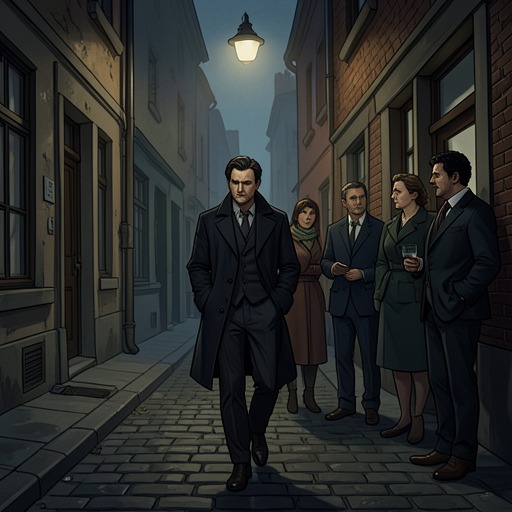
Before leaving London, Marcher makes a pilgrimage through the endless avenues of a suburban necropolis to May’s grave. He intends to renew his farewell, but remains there for an hour, unable either to turn away or to penetrate the darkness of death. He fixes his gaze on her inscribed name and date, as though the stone might disclose the secret it preserves. Kneeling does not bring an answer. The two names on the tomb seem to form eyes that do not know him, and no light breaks through. The scene gives physical form to his bereavement: the grave preserves the evidence of May’s life while withholding the knowledge that could explain his own.
The Grave as Resource and Identity
After his travels, Marcher returns to the cemetery with a changed relation to the place. The grave no longer seems blank or mocking; the plot, tablet, and tended flowers appear to belong to him through his rare experience with May. He resolves not to cut himself off from it again and comes every month, making the visits among his most persistent habits. In a life that seems to offer him little place elsewhere, the few square feet around her grave become the ground on which he can most fully live.
The grave serves as more than a site of mourning. Its register gives Marcher a page on which he can scan the facts of the past and the truth of his life, even though he still cannot name the event May’s assurance described. In memory, he wanders through earlier years beside a companion who is at once May and his younger self, while May remains a stationary presence around whom his recollections turn. He comes to depend on the sense that he once lived, not only for support but for identity. Thus bereavement does not resolve into recovery: it becomes a repetitive practice of return, organized around a grave that offers belonging and orientation while keeping the central secret intact.